Sep 24 , 2026
Choosing an NdFeB magnet manufacturer for an industrial project is rarely just a matter of comparing magnet grades and quotations. A magnet that meets a drawing at the prototype stage must still deliver stable magnetic performance, dimensional accuracy, corrosion resistance, and production consistency when the order moves into volume production.
This is why buyers comparing NdFeB magnets manufacturers should look beyond the product catalog. The more useful questions concern what the manufacturer can actually produce consistently, how critical processes are controlled, how magnetic and dimensional properties are verified, and whether the supplier can support the application over its full production life.
The following five areas provide a practical framework for evaluating manufacturers for motors, automotive systems, industrial automation, wind power, home appliances, and other applications using high-performance permanent magnets.
The right NdFeB grade is the one that delivers the required magnetic performance under the actual operating conditions of the application.
Grade range is an important starting point when evaluating NdFeB magnets manufacturers, but the highest available grade is not automatically the best choice. Engineers need to consider magnetic strength together with operating temperature, demagnetization risk, geometry, corrosion exposure, and the magnetic circuit in which the magnet will operate.
For example, a compact motor requiring high magnetic output may place greater emphasis on remanence and energy product, while a traction motor or compressor operating at elevated temperatures may require stronger intrinsic coercivity. Selecting a higher-performance material than necessary can increase material cost without creating meaningful value, while an insufficient grade can reduce reliability.
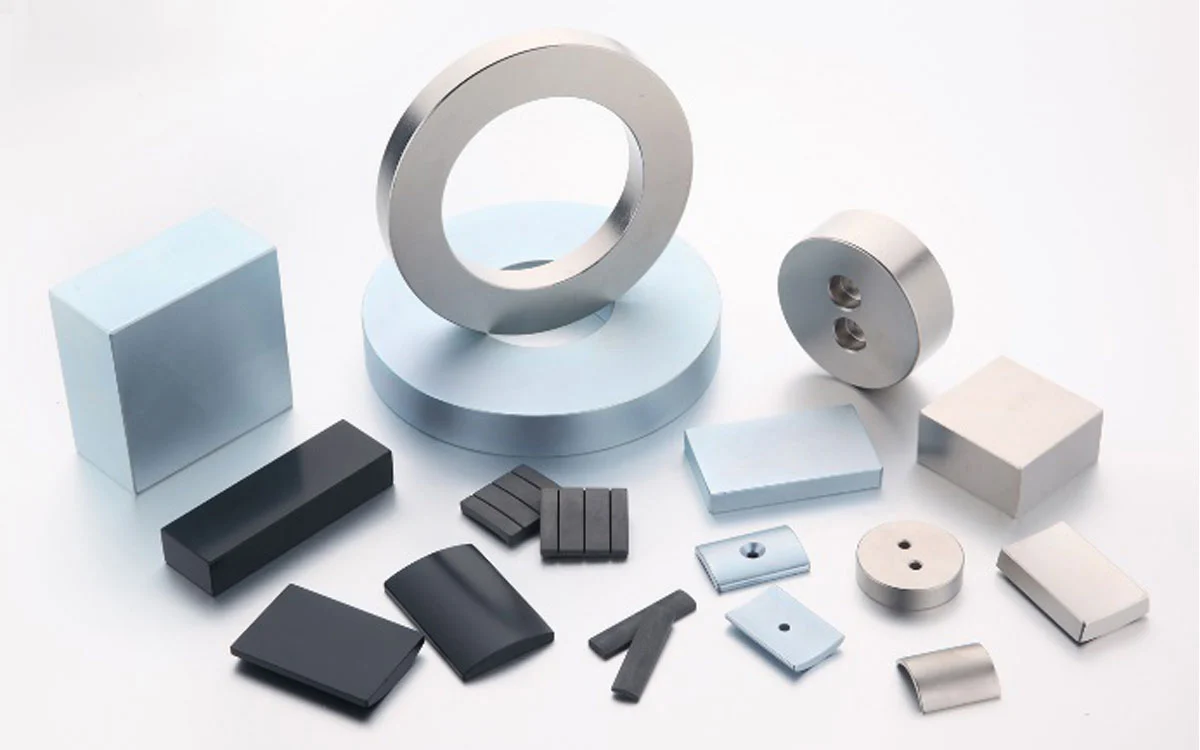
A capable manufacturer should therefore be able to discuss grade selection in the context of the application rather than simply provide a material chart. Ketian Magnet produces a broad range of high-performance sintered NdFeB materials, including M, H, SH, UH, EH, and AH series products. Buyers can review available grades and magnetic property data on the Sintered NdFeB Magnets page.
This engineering support becomes particularly important when a project is moving from an existing magnet design to a new operating condition, smaller package size, higher working temperature, or different magnetic circuit.
Manufacturing capability determines whether specified magnet properties can be reproduced consistently from prototype development through serial production.
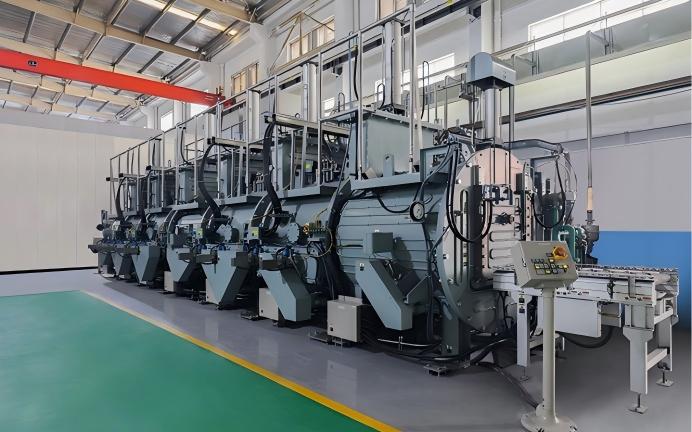
Sintered NdFeB production involves multiple connected processes, including alloy preparation, hydrogen decrepitation, jet milling, molding, sintering, heat treatment, machining, surface treatment, magnetization, and inspection. Variation introduced at one stage can affect magnetic performance or consistency later in the process.
For industrial sourcing, it is therefore useful to understand how much of the critical manufacturing process is controlled by the supplier and how production parameters are managed between batches. Process capability becomes especially relevant for magnets with demanding coercivity requirements, tight dimensions, complex shapes, or high-volume annual demand.
Advanced processing technology can also affect material efficiency. Ketian Magnet, for example, applies Grain Boundary Diffusion technology to selected high-performance grades. This process is used to improve coercivity while controlling the use of heavy rare earth elements, making it relevant to applications such as EV drive motors, compressors, and intelligent robots.
When comparing NdFeB magnets manufacturers, buyers should therefore evaluate more than the maximum grade shown in a brochure. They should determine whether the production system is suitable for the geometry, performance level, quantity, and repeatability required by the actual project.
A reliable NdFeB manufacturer should be able to verify both magnetic performance and physical quality before products enter the customer's assembly process.
Incoming inspection alone is not enough for demanding industrial programs. Quality control should follow the magnet through production and address characteristics that matter to the final application. Depending on the project, this may include magnetic properties, dimensional tolerances, coating condition, appearance, magnetization, corrosion resistance, and batch consistency.
| Evaluation Area | What Buyers Should Confirm | Why It Matters |
|---|---|---|
| Magnetic performance | Grade and magnetic property verification | Reduces performance variation |
| Dimensions | Tolerance and measurement method | Supports reliable assembly |
| Surface protection | Coating quality and corrosion testing | Improves environmental durability |
| Quality system | Relevant certifications and traceability | Supports controlled serial production |
Certifications also provide useful evidence of how a supplier manages production and quality systems. Ketian Magnet currently holds certifications including ISO 9001 and IATF 16949, alongside ISO 14001, ISO 45001, and ISO 27001. For automotive buyers in particular, an established automotive quality management system can be an important part of supplier qualification.
However, certificates should not replace project-specific validation. Buyers should still define the inspection criteria and acceptance requirements that matter to their own product.
Industrial NdFeB magnets are usually specified around the customer's magnetic circuit and assembly rather than selected as generic off-the-shelf components.
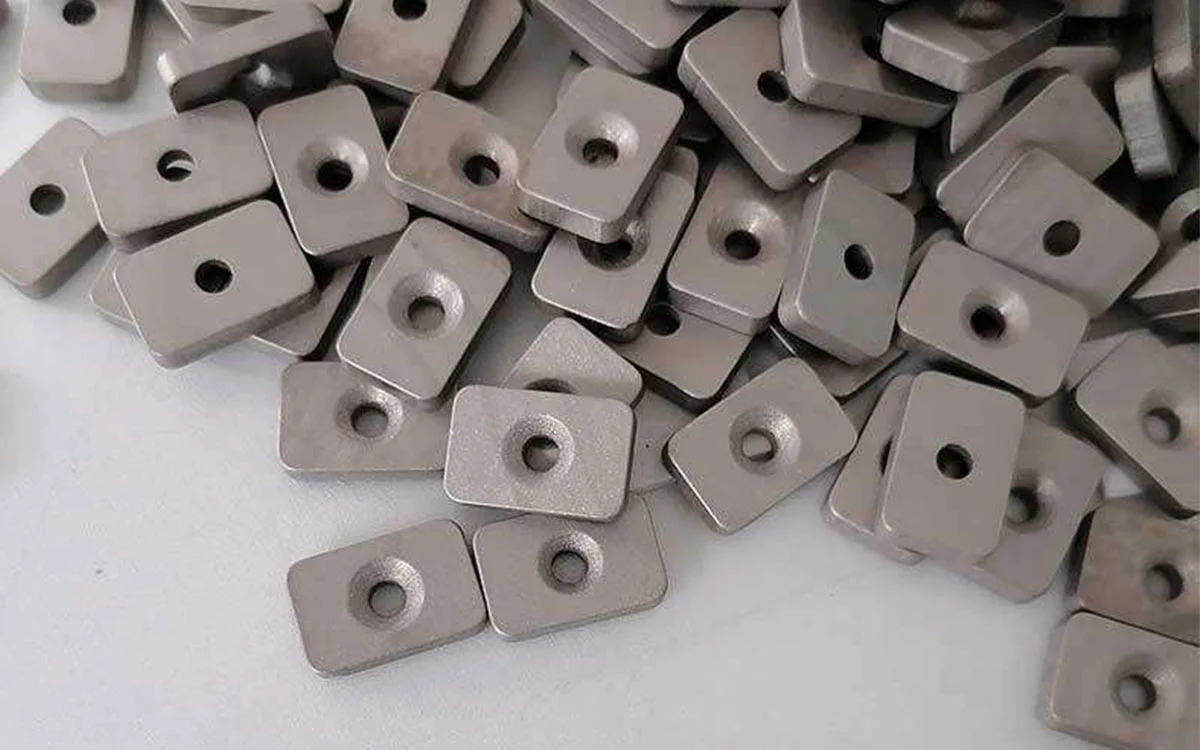
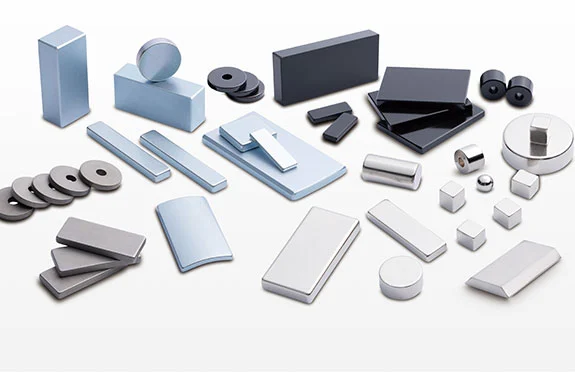
This makes customization capability one of the clearest differences between industrial NdFeB magnets manufacturers and basic magnet distributors. Shape, magnetization direction, dimensional tolerance, edge treatment, and coating can all influence how well a magnet performs after it is installed.
Surface protection deserves particular attention because sintered NdFeB material can be vulnerable to corrosion when exposed to unsuitable environments. Common treatment options include nickel-based coatings, zinc, epoxy, and other protective systems. The choice should reflect the expected operating environment and the customer's validation requirements rather than appearance alone.
Tolerance decisions also need engineering judgment. Extremely tight tolerances can increase machining difficulty and cost. If a looser tolerance has no effect on air gap, positioning, bonding, or assembly performance, it may offer a more practical production solution. On the other hand, rotor, sensor, and precision motion applications may depend on tighter control of critical dimensions.
A useful RFQ therefore gives the manufacturer enough application context to review the drawing intelligently. Instead of asking only whether a part can be made, the buyer can determine whether the proposed material, geometry, coating, and tolerances are appropriate for stable production.
Long-term reliability comes from the manufacturer's ability to maintain material performance, process consistency, production capacity, and technical support throughout the life of a program.
This becomes particularly important once a project moves beyond sample approval. Changes in raw materials, production parameters, coating quality, or dimensional control can create problems even when the nominal magnet grade remains unchanged. Buyers should therefore evaluate how the supplier manages consistency and whether it has sufficient manufacturing infrastructure to support future demand.
Capacity is useful here, but it should be considered together with process capability. Ketian Magnet's current company information lists annual production capacity of 5,000 tons in Ningbo and 4,000 tons in Baotou. The company was founded in 2001 and has developed high-performance NdFeB magnets for applications including electric vehicles, industrial automation, wind turbines, home appliances, and other industrial systems.
For OEM and industrial buyers, this combination of production experience, technical development, quality systems, and application knowledge can be more meaningful than comparing quotation price alone. A lower initial unit cost provides little benefit if inconsistent magnet performance later causes assembly problems, additional inspection, requalification, or production interruption.
For a new project, buyers can send drawings, performance requirements, operating conditions, and expected quantities to Ketian Magnet through the Contact Us page. The technical discussion can then focus on whether the proposed magnet specification is suitable for reliable production rather than simply matching a part number.
Evaluating NdFeB magnets manufacturers requires a broader view than comparing grades and prices. The stronger supplier is the one that can connect magnet performance with the real application, control the manufacturing process, verify critical characteristics, support practical customization, and maintain consistency when production volumes increase.
Before approving a manufacturer, buyers should define the operating conditions and critical requirements of the magnet, then evaluate whether the supplier's material capability and production system can support them. For industrial projects where magnetic performance directly affects the finished product, this approach reduces sourcing risk and creates a more reliable foundation for long-term production.
Provide the drawing, dimensions, magnetization direction, required magnetic performance, operating temperature, coating requirement, expected quantity, and relevant application conditions.
No. The best grade should meet the required magnetic output, temperature resistance, and demagnetization requirements without unnecessary material cost.
Sintered NdFeB can be susceptible to corrosion, so an appropriate surface treatment helps protect the magnet in its intended operating environment.
Compare grade capability, manufacturing control, testing methods, customization support, quality systems, production capacity, and experience with similar applications.
 0574-87574510
  ktsales@ktmagnet.com
 English
 中文
中文 日本語
日本語 한국어
한국어 français
 Deutsch
 Español