Sep 26 , 2026
Ferrite magnets remain a practical choice for many electric motors, particularly where the design has enough space to achieve the required magnetic output without relying on a high-energy rare-earth material. Their corrosion resistance, stable supply, and suitability for volume production make them useful in motors found in appliances, pumps, fans, industrial equipment, and other cost-sensitive applications.
But selecting custom ferrite magnets involves more than sending a motor drawing and specifying a magnet size. The magnet has to work as part of the complete magnetic circuit. Its material properties, pole configuration, geometry, air gap, operating temperature, and assembly method all affect the final motor performance.
For engineers developing or sourcing a ferrite-based motor, the following considerations are especially important before the magnet design is released for production.
Ferrite magnet selection should begin with the magnetic performance required from the motor, rather than with a standard magnet size or shape.
The motor design determines how much magnetic flux is required across the working air gap. Torque target, motor geometry, rotor or stator structure, pole count, winding design, and available magnet volume all influence this requirement. Two motors using magnets of similar dimensions may therefore require different material properties or magnetization arrangements.
This is particularly important when engineers are considering custom ferrite magnets as an alternative to an existing magnet design. Ferrite has lower magnetic energy density than NdFeB, so replacing a neodymium magnet with ferrite normally cannot be treated as a simple one-to-one material substitution. The magnetic circuit may need additional magnet volume or a different geometry to reach the required performance.
The working point of the magnet should also be considered. A ferrite magnet needs to operate safely on its demagnetization curve under normal motor conditions as well as during abnormal electrical or thermal loads. Simply selecting a material based on a catalog value does not confirm that the finished motor will have sufficient demagnetization margin.
For this reason, engineers should provide the magnet manufacturer with relevant magnetic requirements and application information early in the design process. This makes it easier to select a suitable ferrite material instead of relying only on a generic grade recommendation.
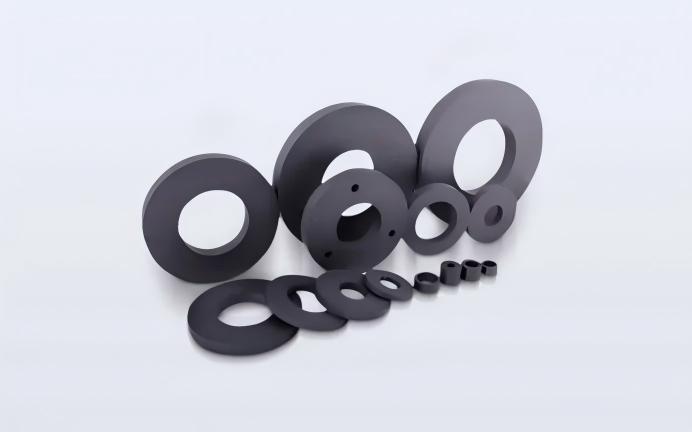
Magnet geometry affects both the magnetic circuit and how efficiently the magnet can be produced and assembled into the motor.
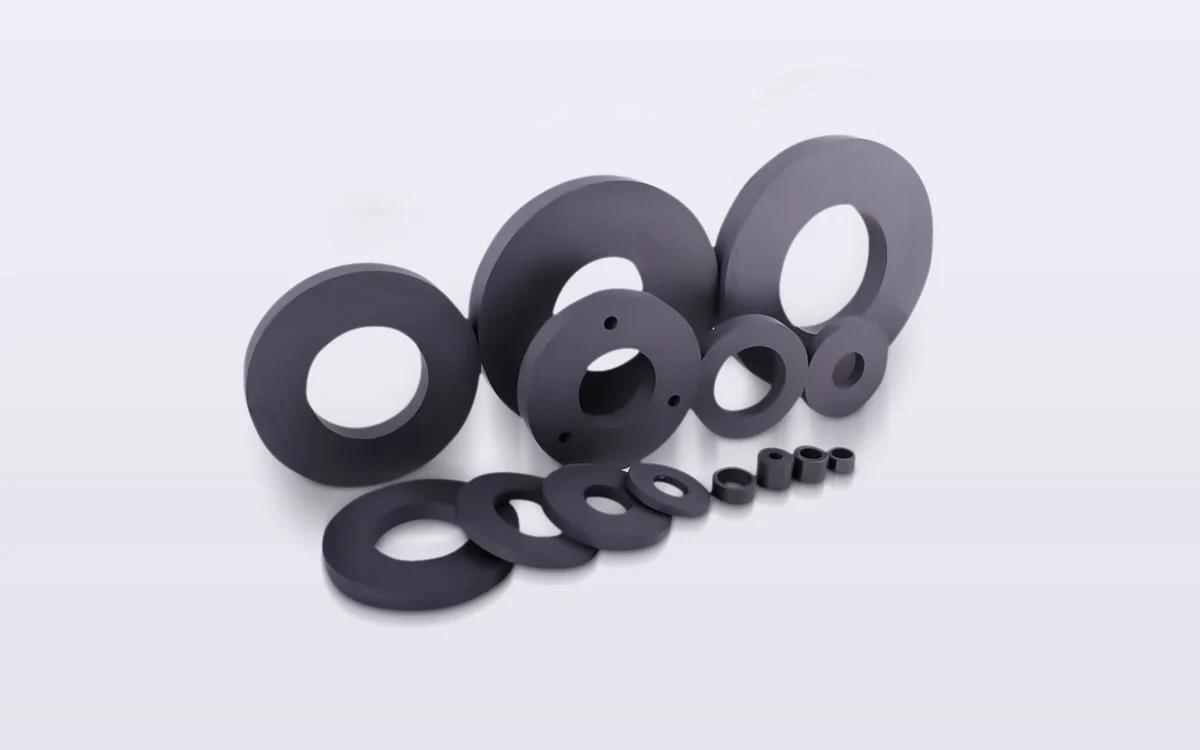
Arc-shaped ferrite magnets, often referred to as ferrite magnetic tiles, are widely suited to cylindrical motor structures because their curved surfaces can follow the motor housing or rotor geometry. Ring magnets can be useful where a continuous circular magnetic structure is required, while blocks and other customized shapes may be selected for different motor constructions.
Changing an arc radius, magnet thickness, arc angle, or axial length does more than change the physical fit. It also changes magnet volume, pole coverage, air-gap flux distribution, and the amount of magnetic material available in the circuit. For this reason, geometry should be reviewed together with the electromagnetic design rather than treated purely as a mechanical dimension.
Ferrite also has different manufacturing characteristics from machined metals. The material is hard and brittle, so designs that require unnecessary thin sections, sharp features, or extensive secondary machining may increase production difficulty. A geometry that performs well magnetically but is difficult to manufacture consistently can create avoidable cost and quality issues once production volume increases.
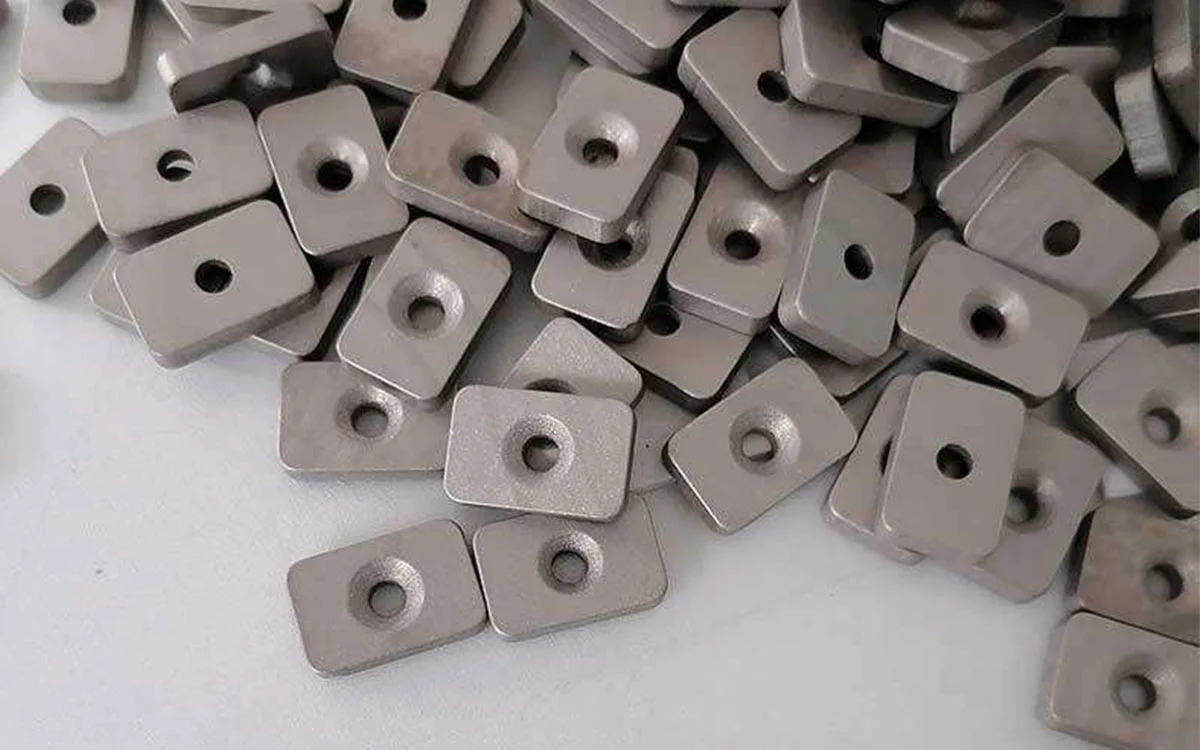
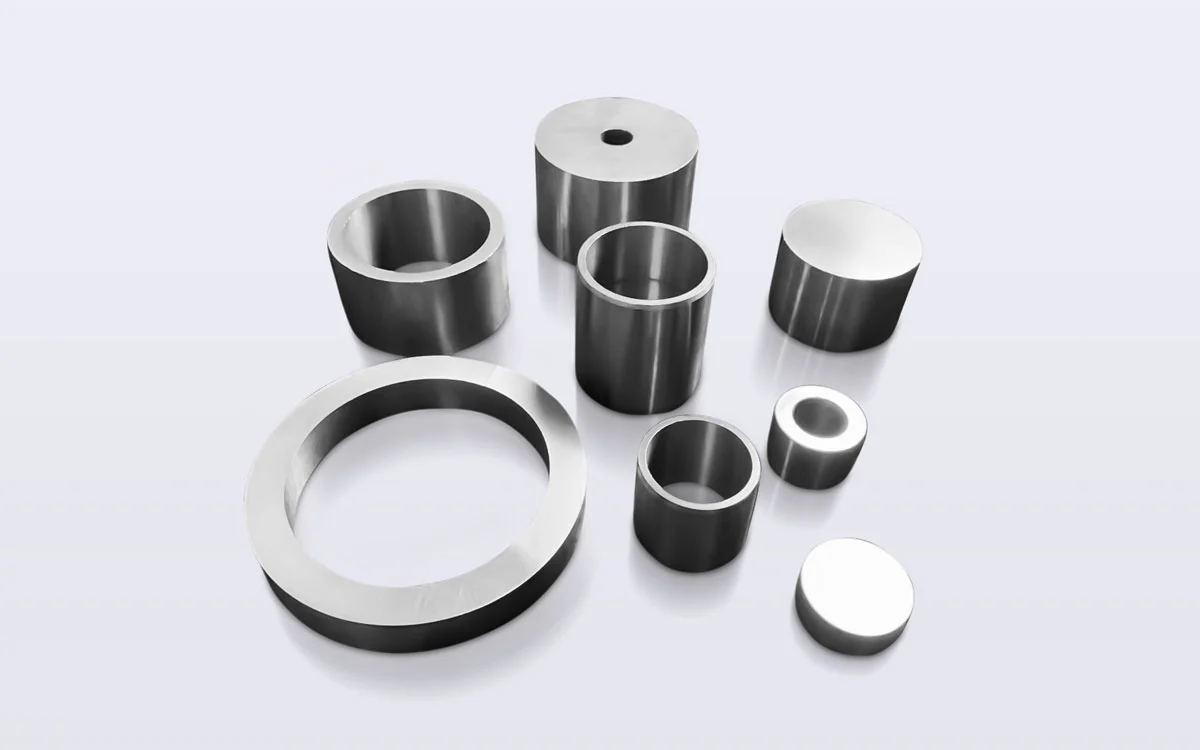
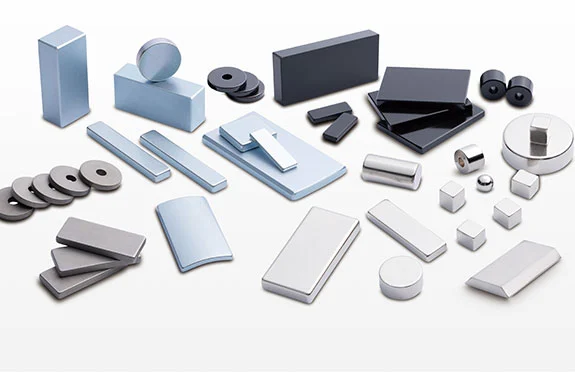
Ketian supplies multiple ferrite configurations, including ring, block, and magnetic tile designs. Engineers developing a new motor can review the available Ferrite Magnets range before discussing a fully customized geometry.
Motor operating temperature should be considered together with the magnet's working point and demagnetization resistance.
Motor magnets do not operate at one fixed temperature. Winding losses, ambient conditions, ventilation, load cycles, and installation environment can all change the temperature around the magnetic circuit. Engineers therefore need to evaluate more than the normal ambient temperature when defining the magnet specification.
Ferrite has useful resistance to permanent demagnetization and is commonly selected for applications requiring dependable long-term performance. However, its behavior with temperature differs from NdFeB. In particular, low-temperature conditions can reduce the coercivity margin of ferrite magnets. If the motor simultaneously experiences a strong opposing magnetic field, the risk of irreversible demagnetization may become more significant.
This means the coldest expected operating condition can sometimes be just as important as the highest operating temperature. Motors intended for outdoor equipment, vehicles, refrigeration-related systems, or equipment exposed to seasonal temperature changes should be evaluated over their actual operating range.
Ferrite also has an advantage in environments where corrosion is a concern. Unlike sintered NdFeB, ferrite generally offers good inherent corrosion resistance and does not normally depend on a metallic protective coating for ordinary environments. The complete motor assembly still needs environmental evaluation, but this material characteristic can simplify magnet protection in suitable applications.
| Design Factor | What Engineers Should Confirm | Possible Impact on the Motor |
|---|---|---|
| Magnetic performance | Required flux and demagnetization margin | Torque and operating stability |
| Magnet geometry | Arc, thickness, length, and pole coverage | Air-gap flux distribution |
| Temperature | Actual operating temperature range | Magnetic performance and demagnetization risk |
| Dimensions | Critical assembly tolerances | Air gap and positioning consistency |
| Magnetization | Direction and pole arrangement | Motor magnetic circuit performance |
Dimensional tolerances should be assigned according to the functions that actually affect the motor assembly and magnetic air gap.
Motor drawings can sometimes apply tight tolerances to nearly every magnet dimension. For custom ferrite magnets, this approach may add unnecessary manufacturing difficulty without improving motor performance. It is usually more useful to identify the dimensions that directly control magnet positioning, air-gap consistency, bonding, or mechanical clearance.
For an arc magnet, for example, the surfaces that locate the magnet against the motor housing and the dimensions that influence the air gap may deserve closer control than a non-critical surface with no effect on assembly. Discussing these functional dimensions with the magnet manufacturer can help establish tolerances that are both practical to manufacture and appropriate for the motor design.
Magnetization should be defined just as carefully. Engineers need to specify the required magnetization direction and pole arrangement rather than assume they are obvious from the part geometry. For a motor using multiple arc segments, the magnetic orientation of each segment must correspond correctly with the intended pole sequence after assembly.
Assembly conditions also matter because ferrite is brittle. Excessive mechanical stress during press fitting or assembly can result in chipping or cracking. Where magnets are bonded into a rotor or stator structure, the adhesive, bond gap, positioning method, and curing process should be compatible with both the magnet and the surrounding components.
A production-ready ferrite magnet specification should communicate how the magnet needs to perform, not simply what dimensions appear on the drawing.
When requesting custom ferrite magnets, the drawing remains essential, but application information can make supplier evaluation much more effective. A manufacturer that knows the magnet is intended for a motor can review the geometry, magnetic requirement, magnetization arrangement, critical dimensions, and working environment as one system.
The expected production volume is also relevant. A prototype can sometimes be produced using processes that would not be practical for continuous high-volume manufacturing. Before tooling and mass production begin, engineers should confirm that the agreed design can be reproduced consistently and that the inspection method reflects the characteristics that matter to the finished motor.
Sample validation should therefore evaluate more than whether individual magnets meet dimensional inspection. Where appropriate, engineers should also confirm magnetic performance after magnetization and assess the magnets in the actual motor assembly. This can reveal issues involving positioning, air gap, magnetization, bonding, or magnetic circuit interaction that may not be obvious from isolated magnet measurements.
Ketian Magnet provides custom ferrite solutions for applications including electric motors and other industrial equipment. If you are developing a new motor or adapting an existing design for ferrite magnets, you can contact Ketian Magnet with your drawing and application requirements to discuss material, geometry, magnetization, and production feasibility.
Custom ferrite magnets can provide a practical balance of magnetic performance, durability, manufacturability, and cost for many electric motor designs, but successful selection depends on how well the magnet is matched to the complete magnetic circuit.
Engineers should consider the required flux, magnet working point, geometry, temperature range, critical tolerances, magnetization direction, and assembly method before releasing a design for production. These factors are closely connected: changing the magnet thickness or arc geometry may alter both the mechanical fit and magnetic output, while an apparently acceptable material can still face demagnetization risk if the motor operates outside the conditions considered during selection.
Working with a manufacturer at the design stage makes it easier to identify these issues before tooling and volume production. The result should be a ferrite magnet specification that is not only technically achievable, but also appropriate for repeatable motor manufacturing.
Yes. Ferrite permanent magnets are widely suitable for motors where the available magnet volume and magnetic circuit can provide the required output without the higher energy density of rare-earth magnets.
Yes. Custom ferrite magnets can be produced in different shapes and dimensions with application-specific magnetization and dimensional requirements.
The curved geometry fits cylindrical motor structures and allows the magnet surface to follow the required magnetic air-gap arrangement.
Provide the part drawing, magnetic requirements, magnetization direction, operating temperature, critical tolerances, application details, and expected production quantity.
This is the first one.
 0574-87574510
  ktsales@ktmagnet.com
 English
 中文
中文 日本語
日本語 한국어
한국어 français
 Deutsch
 Español